
This content is for educational purposes only and does not constitute medical advice, diagnosis, or treatment. For concerns related to your baby’s health, development, or sleep, or your own physical or mental wellbeing, always consult a qualified healthcare provider.
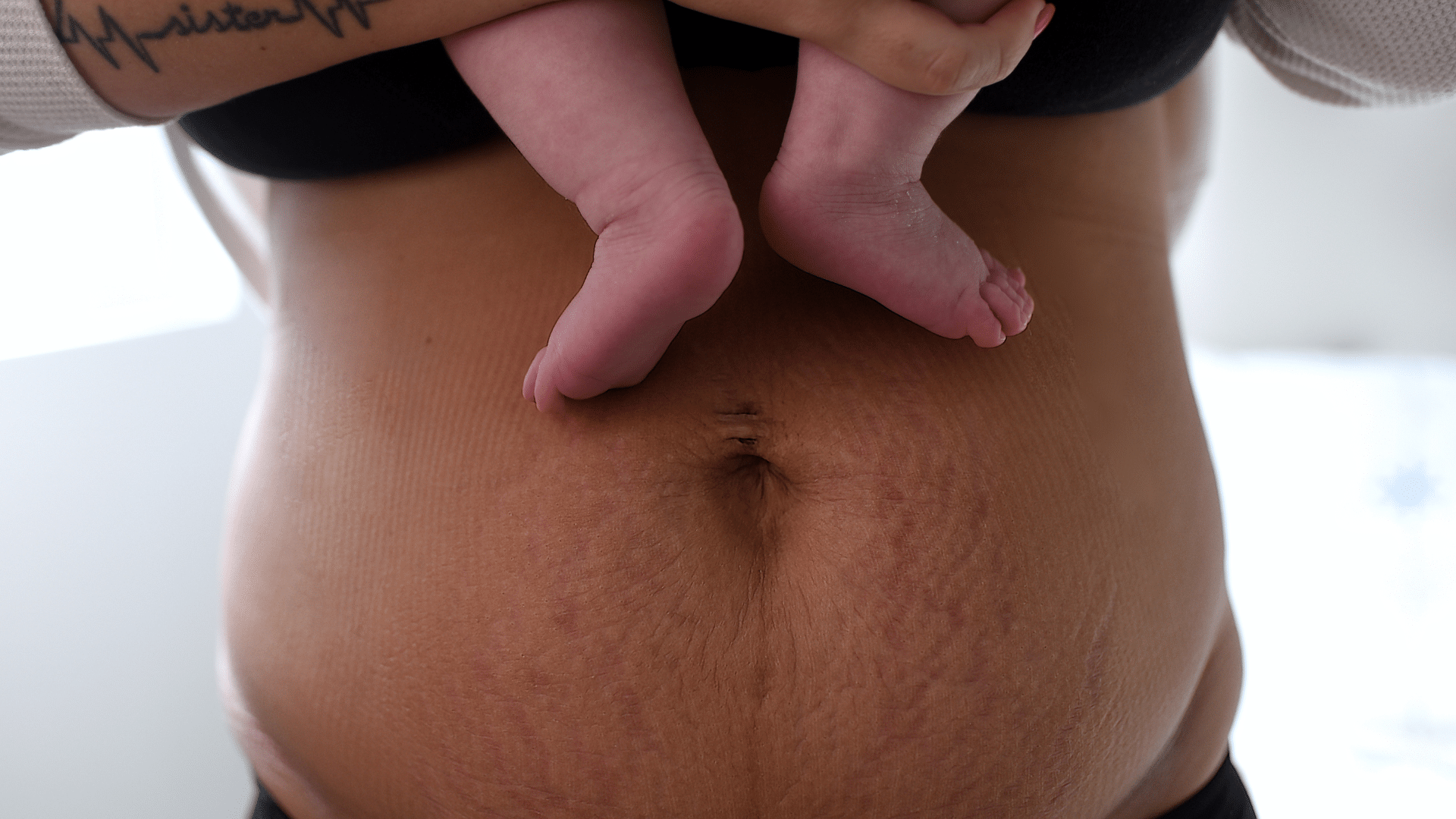
About 60% of women experience some degree of abdominal separation (diastasis recti) postpartum, and roughly 45% still have a measurable gap at six months. 1 2This happens when the growing uterus stretches the connective tissue between the two sides of your abdominal muscles. Signs include a visible “pooch” in the midline, doming or coning of the belly when you sit up, lower back pain, or a feeling of core instability. Exercise therapy, including deep trunk stabilization and abdominal strengthening, can effectively reduce separation and improve function, but proper technique is critical, and individualized programs based on severity are strongly recommended.3 In the early stages of recovery, exercises that create forward pressure on the abdominal wall like crunches and sit-ups are generally not advised, not because they are universally harmful, but because most people with diastasis recti lack the deep core control needed to manage the intra-abdominal pressure these movements generate.4 When you can perform movements without visible doming or coning, you can begin to progress. A pelvic floor physical therapist can assess where you are and build a plan that meets you there.
To learn more or to find a specialist, check out our directory.
This content is for educational purposes only and does not constitute medical advice, diagnosis, or treatment. For concerns related to your baby’s health, development, or sleep, or your own physical or mental wellbeing, always consult a qualified healthcare provider.
References
- Sperstad JB, Tennfjord MK, Hilde G, Ellström-Engh M, Bø K. Diastasis recti abdominis during pregnancy and 12 months after childbirth: prevalence, risk factors and report of lumbopelvic pain. British Journal of Sports Medicine. 2016;50(17):1092–1096. https://doi.org/10.1136/bjsports-2016-096065
- Mota P, Pascoal AG, Carita AI, Bø K. Prevalence and risk factors of diastasis recti abdominis from late pregnancy to 6 months postpartum, and relationship with lumbo-pelvic pain. Manual Therapy. 2015;20(1):200–205. https://doi.org/10.1016/j.math.2014.09.002
- Thabet AA, Alshehri MA. Efficacy of deep core stability exercise program in postpartum women with diastasis recti abdominis: a randomised controlled trial. Journal of Musculoskeletal and Neuronal Interactions. 2019;19(1):62–68. https://pmc.ncbi.nlm.nih.gov/articles/PMC6454249/
- Gluppe SL, Engh ME, Bø K. What is the evidence for abdominal and pelvic floor muscle training to treat diastasis recti abdominis? A systematic review with meta-analysis. Brazilian Journal of Physical Therapy. 2021;25(6):664–675. https://doi.org/10.1016/j.bjpt.2021.06.006
- Sperstad JB, Tennfjord MK, Hilde G, Ellström-Engh M, Bø K. Diastasis recti abdominis during pregnancy and 12 months after childbirth: prevalence, risk factors and report of lumbopelvic pain. British Journal of Sports Medicine. 2016;50(17):1092–1096. https://doi.org/10.1136/bjsports-2016-096065 ↩︎
- Mota P, Pascoal AG, Carita AI, Bø K. Prevalence and risk factors of diastasis recti abdominis from late pregnancy to 6 months postpartum, and relationship with lumbo-pelvic pain. Manual Therapy. 2015;20(1):200–205. https://doi.org/10.1016/j.math.2014.09.002 ↩︎
- Thabet AA, Alshehri MA. Efficacy of deep core stability exercise program in postpartum women with diastasis recti abdominis: a randomised controlled trial. Journal of Musculoskeletal and Neuronal Interactions. 2019;19(1):62–68. https://pmc.ncbi.nlm.nih.gov/articles/PMC6454249/ ↩︎
- Gluppe SL, Engh ME, Bø K. What is the evidence for abdominal and pelvic floor muscle training to treat diastasis recti abdominis? A systematic review with meta-analysis. Brazilian Journal of Physical Therapy. 2021;25(6):664–675. https://doi.org/10.1016/j.bjpt.2021.06.006 ↩︎