
Background
Care Philosophy
At Express It Speech, our philosophy is grounded in honesty, clinical integrity, and a deep respect for the families we serve. We believe meaningful progress begins with clarity—accurate diagnosis, thoughtful clinical reasoning, and transparent communication. Rather than applying a one-size-fits-all approach, we take the time to understand each child as a whole, including their development, environment, and lived experiences.
We prioritize accuracy over assumption. A thorough evaluation is the foundation of effective therapy, and we approach this process with care and intention. Our goal is not simply to begin services quickly, but to ensure that intervention is truly needed, appropriately targeted, and likely to make a meaningful impact. When a child’s needs fall outside our scope, or when collaboration with another provider would better support the child, we provide clear and timely referrals. Families trust us to be direct and transparent, and we honor that trust by always acting in the child’s best interest.
Our treatment approach is individualized, evidence-informed, and purposeful. We do not rely on passive routines or generalized programs. Each recommendation and intervention is selected based on clinical reasoning and tailored to the unique needs of the child and family. We focus on functional outcomes—skills that matter in everyday life—while also addressing the underlying factors that influence communication and feeding. By looking beyond surface-level symptoms, we aim to support lasting, meaningful progress.
We recognize that therapy does not occur in isolation. Families are essential partners in the process, and their insights and goals help guide our work. We emphasize collaboration, education, and open communication so that caregivers feel informed and confident in supporting their child. Understanding the “why” behind therapy is just as important as the therapy itself, and we strive to make that knowledge accessible and practical.
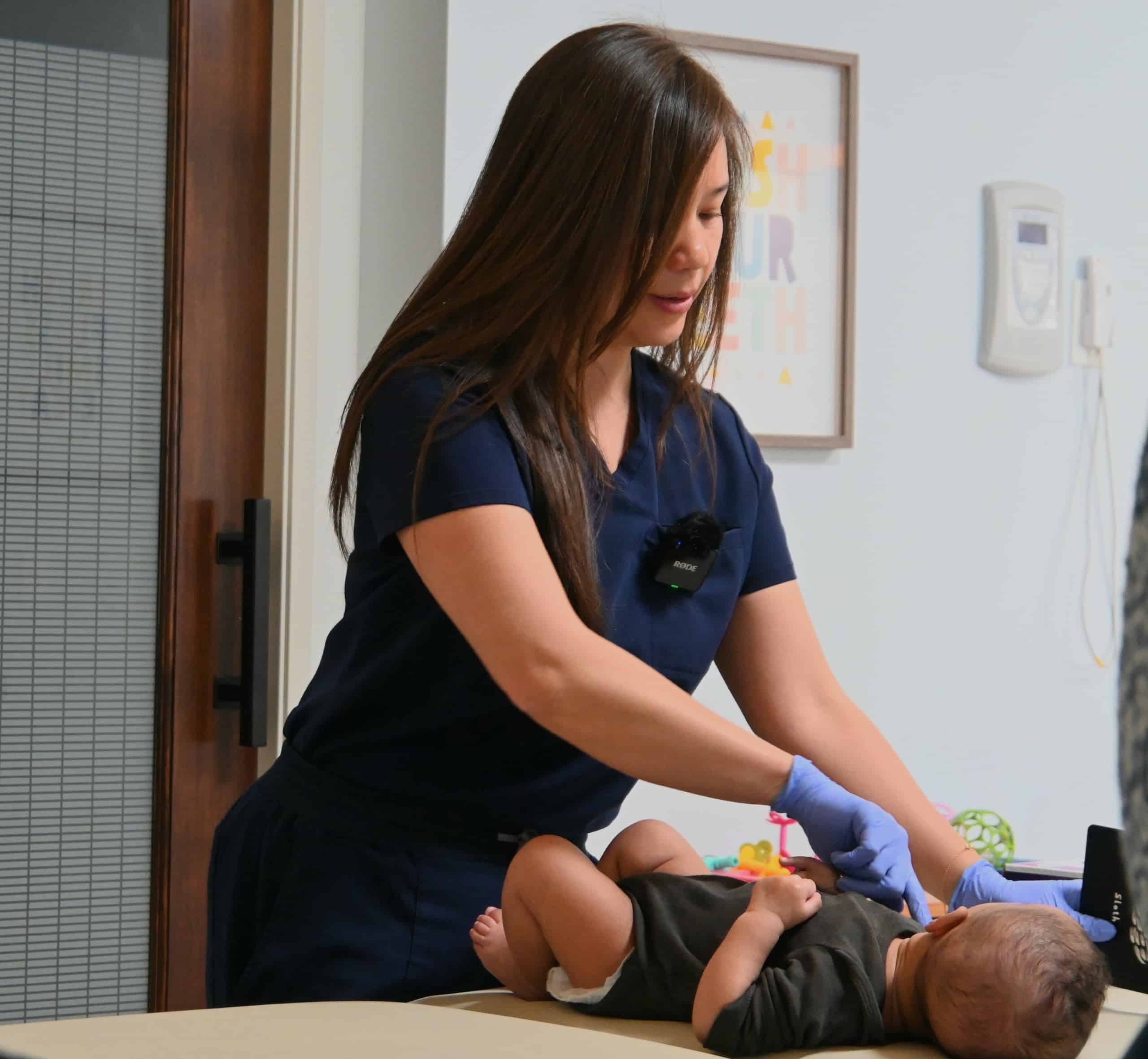
In feeding therapy, we take a trauma-informed approach. Feeding challenges—particularly those involving breastfeeding and early feeding experiences—can carry significant emotional weight for both the infant and the caregiver. These experiences can shape interactions, influence behavior, and impact the overall feeding relationship. We recognize the importance of addressing not only the physical aspects of feeding, but also the emotional context in which feeding occurs.
Our role is to create a space that is respectful, non-judgmental, and emotionally safe. We do not use force, pressure, or rushed techniques. Instead, we focus on building trust—supporting the child’s comfort and autonomy while helping caregivers feel confident and supported. We work to strengthen both skill development and the relationship around feeding, recognizing that connection and trust are essential to progress.
We also believe in respecting the child as an individual. Children are not defined by diagnoses or delays. Their cues, preferences, and comfort levels matter, and they are active participants in their own development. We aim to create an environment where children feel safe and understood, because progress is most meaningful when it occurs within a foundation of trust and engagement.
At Express It Speech, we are committed to ethical, reflective practice. We stay informed by current research while also valuing clinical experience and professional judgment. This allows us to provide care that is both evidence-informed and responsive to the real-world needs of the families we serve.
Above all, we are guided by a simple principle: do what is right for the child and family, even when it is not the easiest path. This means being honest about needs, timelines, and expectations. It means recognizing when additional support is necessary and helping families access the right resources. And it means approaching every interaction with respect, compassion, and integrity.
Families come to us during times of uncertainty, and we do not take that lightly. Our goal is to provide care that is not only clinically sound, but also supportive, transparent, and grounded in trust—so that every child and family feels understood, respected, and empowered moving forward.
Specialties
Neurodivergence (e.g. ASD - ADHD)
Trauma-informed care needs
Oral habits (e.g. pacifier use - thumb or digit sucking habits - blanket sucking)
Speech milestones
Myofunctional disorders (mouth breathing - snoring - drooling)
Oral-motor hypotonia (e.g. - weak jaw - open mouth posture)
Solid feeding and swallowing (gagging - poor chewing - choking - straw drinking - cup drinking - leakage - picky eating - refusal)
Feeding tube support and weaning
Oral Ties (tongue-tie - lip-tie - buccal-ties)
Breastfeeding/bottle feeding difficulties (latching - dribbling - leakage - gagging - choking - coughing - clicking - weaning - aversion)
Allergies and food sensitivities
Genetic & birth conditions (e.g. Down syndrome - cerebral palsy)
Medically complex
GI Issues (Colic - Spitting up - Reflux - GER - GERD - gas - constipation)
Prematurity
Other
Education & Training
PhD
CCC-SLP
Insurance
Aetna
Other
Blue Cross Blue Shield
Cigna
Out-of-network
Tricare
Languages
English
Affirming Care
Trauma Informed
Contact
Service Areas
Toms River, NJ
Hazlet, NJ
Marlton, NJ
Popular Courses
Lead in copy goes here in two or three lines to leave a little negative space below this introduction