
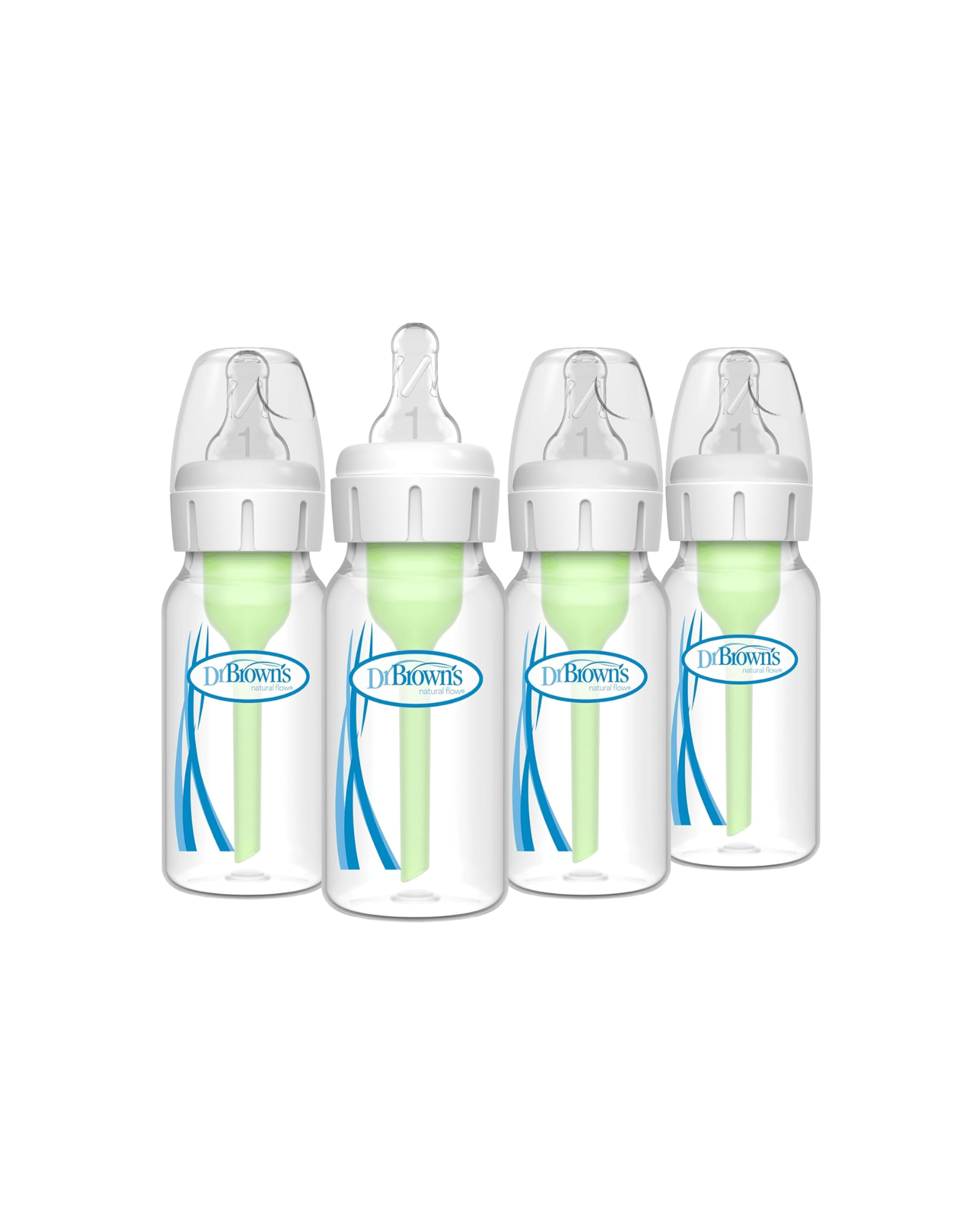
This product is selected by our team of experts across feeding, sleep, and pediatric development, ensuring a well rounded and practical perspective. Some links on this page are affiliate links, which means we may earn a commission if you choose to purchase through them. Our recommendations are guided by expert review and real world usefulness, and we focus on products we genuinely support.
Just like pacifiers, there is no single bottle that works for every baby. Nipple shape, flow rate, material, and whether the nipple relies more on suction or compression to release milk all matter, and what works well for one baby may not be the right fit for yours. We recommend starting with a slow flow nipple and being willing to try a few options before investing heavily in any one system. Here are a few we feel confident recommending as a starting point.
A longtime favorite among NICU therapists and feeding specialists, it offers one of the widest ranges of flow rates on the market, from Preemie up through faster options. Feeding therapists tend to like the narrow, gradually sloped nipple shape because it allows the tongue to fully cup the nipple and achieve a deep latch, similar to the tongue position babies use at the breast. Worth knowing: the nipple itself is on the firmer side. The internal vent system is designed to prevent a vacuum from building inside the bottle as your baby feeds, which is what helps reduce gas, spit-up, and colic, but this doesn’t change how much oral effort the firmer nipple itself requires. Some babies find that firmness harder to manage. If you notice gagging, poor transfer, milk leaking or spilling from the lips, or a baby who tires out before finishing a feed, that firmness may be the culprit. If that sounds like your baby, the Evenflo Balance, with its pyramid shaped nipple, is worth trying instead.
What We Look For in a Bottle
- A narrow base with a gradual slope, which allows the tongue to fully cup the nipple and supports a natural sucking motion
- Start with the slowest flow rate available, so your baby can control the pace the way they would at the breast
- A shape that supports a full latch, rather than sitting only on the tip of the tongue (common in wide necked bottles)
- Whether the nipple relies more on suction or compression, since this can matter for babies with a weak suck, a tongue tie, or other feeding challenges
What to Avoid
- Flat, straw-shaped, or overly wide nipples, which can encourage a shallow latch or “chomping” pattern instead of a full latch
- Fast flow nipples, which can cause gulping, poor coordination between sucking and breathing, and a higher risk of overfeeding
- Assuming you need to size up the flow rate as your baby grows. Many feeding therapists recommend staying on the slowest flow for as long as it’s working
- If you’re having trouble with bottle feeding, type “feeding” or “bottle” into our directory to find a provider who can support you