This content is for educational purposes only and does not constitute medical advice, diagnosis, or treatment. For concerns related to your baby’s health, development, or sleep, or your own physical or mental wellbeing, always consult a qualified healthcare provider.
Before you ever steam a sweet potato, your baby is already laying the groundwork for eating. The weeks leading up to solid food introduction are full of small, meaningful preparation, and there is a lot parents can do to set their baby up for success at the table before that first spoonful ever arrives.
What is “readiness,” really?
The American Academy of Pediatrics (AAP) identifies three key signs of readiness: the ability to sit in a high chair or feeding seat with good head control, showing interest in food (such as watching you eat or reaching for your plate), and the ability to move food from a spoon toward the throat rather than immediately pushing it back out.1 The CDC adds that bringing objects to their mouth and being able to grasp small objects are also signs of developmental readiness.2
One of those signs (the ability to move food from a spoon rather than pushing it out) deserves a little more nuance, because it causes a lot of unnecessary worry. Often when babies first start solids, some of the food will end up on their chin. This does not mean they do not like it or are not ready; it just means they do not yet have the skill to consistently move past the tongue extrusion or “tongue thrust” reflex.3 Some initial pushing out is completely expected and normal at the start. What matters is that it improves and integrates over the first weeks of exposure, not that it is entirely absent from day one. If food is still being consistently pushed out after several weeks of regular exposure, that is worth mentioning to your pediatrician or a feeding specialist.
Why most specialists recommend waiting closer to 6 months
While the AAP window opens at 4 months for some babies, most pediatric feeding specialists recommend waiting closer to 6 months, and the reasons go beyond just age. Before 6 months, the gag reflex sits toward the front of the tongue. Between 6 and 9 months it gradually moves toward the back of the mouth, where it normally settles after 9 months.4 This matters because a forward-positioned gag reflex means babies will gag more easily and more intensely on food. Not because anything is wrong, but because their protective reflexes have not yet matured for the task of eating.
Trunk strength and stability are also still developing at 4 and 5 months. Trunk stability ensures the baby can effectively manage food in their mouth without slouching into a position that compromises their airway.5 A baby who can sit more securely (even with light support) is simply better equipped to handle the coordination demands of swallowing food safely. By 6 months, most babies have both better trunk stability and a gag reflex that has moved further back, making the feeding experience safer and more comfortable for everyone.
The AAP recommends introducing solid foods no earlier than 4 months, with research suggesting introduction before 4 months may increase risks for childhood obesity.1 Most families find that waiting closer to 6 months means a smoother, less messy, and more successful start.
Highchair readiness: what to look for
One of the most important (and often overlooked) readiness signs is how your baby sits. A baby is ready for solids when they can keep their head and neck stable while sitting upright without flopping forward, falling to the side, or hunching back. When using their arms while seated, they should not topple over. A little support from one arm is okay, but they are not ready if they need both hands planted on a surface just to stay upright.6
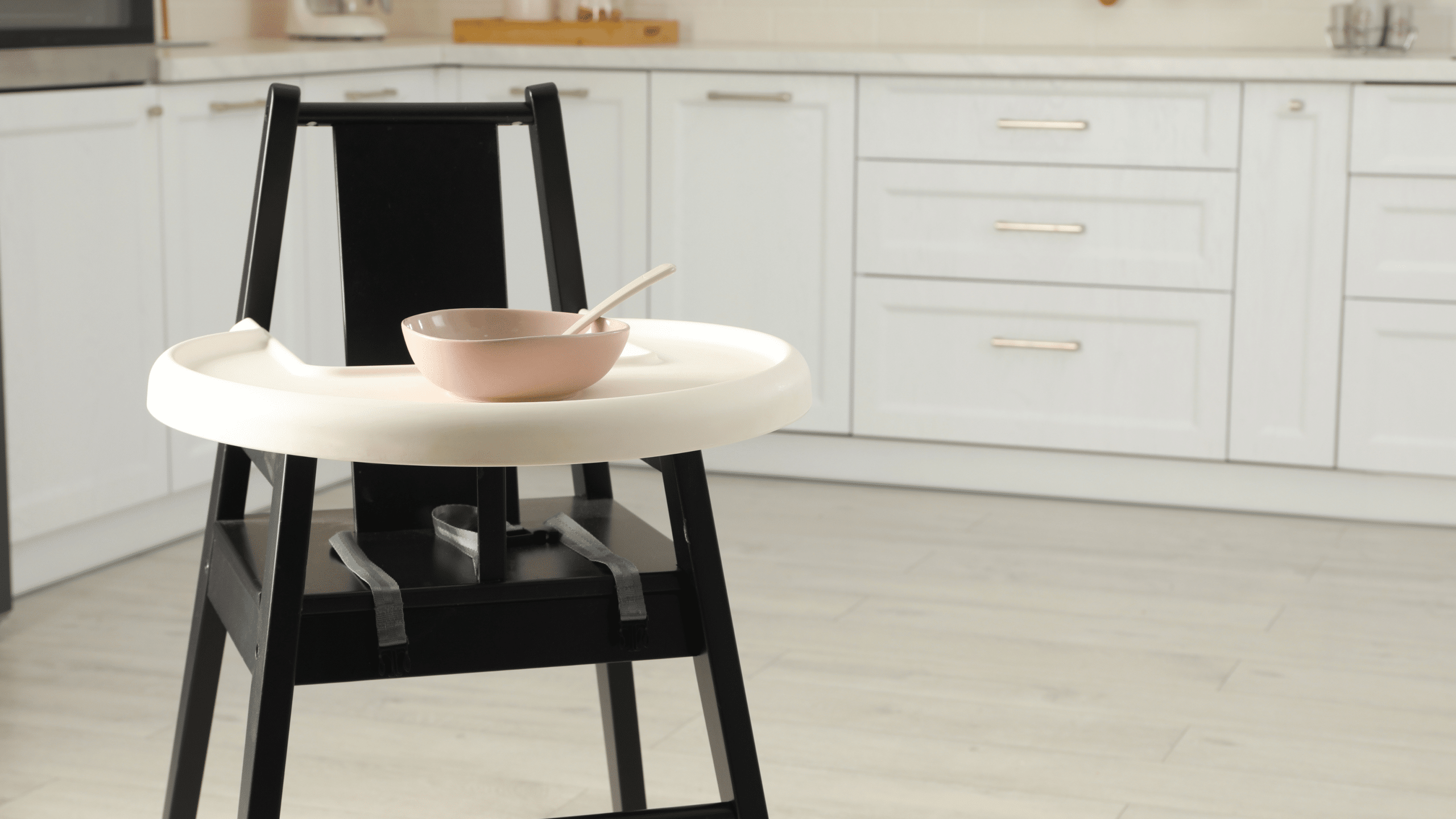
Once eating begins, positioning matters just as much. Feeding therapists recommend the “90-90-90 rule”: hips, knees, and ankles should each be at a 90-degree angle, with feet firmly supported by a (hopefully adjustable) foot plate. This stable position helps babies steady their bodies so they can focus on the work of eating, and supports safer swallowing, better tongue control, and more efficient movement of food through the mouth and throat.6
Common myths about readiness
A few misconceptions come up again and again. Here is what the evidence actually says:
Myth: Starting solids early will help your baby sleep through the night.
This is one of the most persistent myths in parenting, and it is not supported by evidence. There is no strong data to show that introducing solids before 4 months leads to better sleep, and some research suggests the opposite: babies started on solids too early can actually become worse sleepers because their digestive systems are not yet ready to handle food.7
Myth: Your baby needs teeth before starting solids.
Teeth are not a prerequisite. The molars babies actually use to chew do not come in until well after the first birthday.8 Babies’ gums are stronger than most people realize, and they are perfectly capable of mashing and breaking down soft foods. Readiness for solids is about oral motor skills, sitting ability, and developmental markers, not the appearance of teeth.9
Myth: Baby must sit completely unsupported before starting solids.
Full independent sitting is not a requirement. What matters is that your baby can sit upright with minimal support, holding their head steady without slumping forward or collapsing to one side. A rolled towel in a high chair, a pillow at the hips, or your hand at their side is fine as long as the trunk is upright and stable.6
Myth: Hunger or frequent feeding means your baby is ready for solids.
Growth spurts can look a lot like readiness. A baby going through a growth spurt may feed more, seem hungrier, and wake more at night, but none of these alone signals readiness for solid foods. True readiness is about developmental milestones, not appetite fluctuations.10
Pre-feeding practice: what you can do from around 4 to 5 months
You do not have to wait until 6 months to start preparing. Starting around 4 to 5 months, when a baby begins showing interest in others eating and can sit comfortably supported in a high chair, feeding therapists recommend involving baby in family mealtimes. Bringing baby to the table regularly to observe and practice prerequisite skills can ease the transition considerably when the time comes.11
Here are some simple, therapist-recommended ways to build readiness:
Let them mouth a silicone spoon.
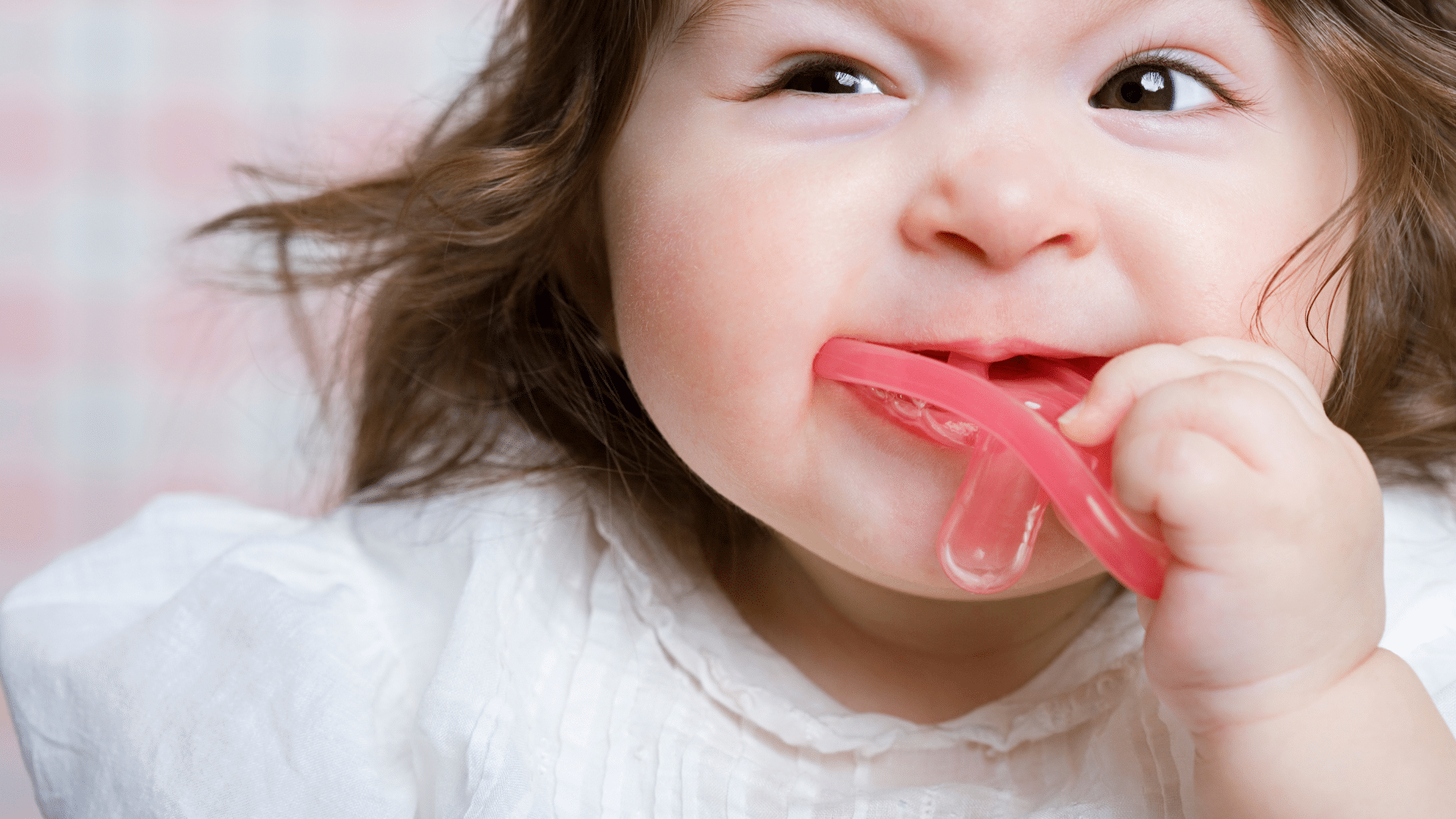
Teethers and safe spoons play an important role in pre-feeding development. They help move the gag reflex back, develop early chewing patterns, and support sensory and oral motor development.12 Letting your baby chew and mouth a soft silicone spoon gets them comfortable with the sensation of a utensil before food is ever on it.
Offer mouthing toys on the high chair tray.
Suction toys fixed to the high chair tray help your baby get used to sitting upright and engaging with objects in the same space where they will later eat.13 Reaching for and mouthing toys on the tray also builds the hand-to-mouth coordination and visual tracking that self-feeding requires.
Include them at the table.
Talk about what you are eating, let them watch you chew, and model the social experience of mealtimes. Babies learn by observation, and the dinner table is one of their most powerful classrooms.
Offer chewing toys that reach toward the back of the mouth.
Teethers strengthen the muscles of the jaw, lips, and tongue, which are crucial for chewing, swallowing, and later for speech. They also encourage tongue lateralization (the ability to move the tongue from side to side), which is essential for managing food in the mouth and preparing it for swallowing.14
If you are having trouble
If your baby struggles with mouthing, seems very sensitive around the face or mouth, has difficulty sitting with any trunk support, or has shown signs of difficulty with bottle or breastfeeding, it is worth flagging with your pediatrician before starting solids. A feeding therapist (often a speech-language pathologist or occupational therapist with specialized training in feeding) can conduct an oral motor and feeding assessment to determine whether your baby’s skills are where they should be and rule out any structural or functional barriers.15
This content is for educational purposes only and does not constitute medical advice, diagnosis, or treatment. For concerns related to your baby’s health, development, or sleep, or your own physical or mental wellbeing, always consult a qualified healthcare provider.
Every baby is different. Browse The Baby Collective directory to find the right specialist for your family.
References
1. American Academy of Pediatrics / HealthyChildren.org. “Starting Solid Foods.” https://www.healthychildren.org/English/ages-stages/baby/feeding-nutrition/Pages/Starting-Solid-Foods.aspx
2. CDC. “When, What, and How to Introduce Solid Foods.” https://www.cdc.gov/infant-toddler-nutrition/foods-and-drinks/when-what-and-how-to-introduce-solid-foods.html
3. Solid Starts. “What is Tongue Thrust? How Does it Relate to Solids?” https://solidstarts.com/tongue-thrust-and-starting-solids/
4. SR Nutrition. “Gagging and the Tongue Thrust Reflex: Weaning Difficulties.” https://www.srnutrition.co.uk/2020/09/gagging-and-the-tongue-thrust-reflex-weaning-difficulties/
5. SwaddleAn. “What Can I Feed My 6-Month-Old? The First Foods Survival Guide.” https://swaddlean.com/blogs/baby-care/what-can-i-feed-my-6-month-old-baby
6. Nibble & Rest. “Best High Chair Guide: Safety, Comfort & Positioning Tips.” https://nibbleandrest.com/blogs/blog-post/how-to-pick-a-high-chair-safety-comfort-positioning
7. University of Utah Health. “Debunking Old Wives’ Tales: What You Should and Should Not Be Feeding Your Baby.” https://healthcare.utah.edu/the-scope/kids-zone/all/2026/03/debunking-old-wives-tales-what-you-should-and-shouldnt-be-feeding
8. Solid Starts. “Starting Solids FAQs.” https://solidstarts.com/starting-solids-faqs/
9. Loudoun Pediatric Associates. “Is It Okay to Give My Baby Solids If They Don’t Have Teeth?” https://www.loudounpeds.com/is-it-okay-to-give-my-baby-solids-if-they-dont-have-teeth/
10. Government of Canada / Thunder Bay District Health Unit. “Feeding Your Baby: A Guide to Help You Introduce Solid Foods.” https://www.tbdhu.com/sites/default/files/files/resource/2021-05/Feeding%20Your%20Baby_A%20guide%20to%20help%20you%20introduce%20solid%20foods_Updated2021.pdf
11. Sprout + Thrive. “Oral Motor Development.” https://www.sproutandthrive.com/blog/tag/oral-motor+development
12. Dr. Brown’s Baby. “All About Teethers: A Speech Therapist’s Advice.” https://drbrownsbaby.com/blogs/articles/all-about-teethers-when-introduce-them-choose-right-one
13. The Pediatric Dietitian. “Sensory Activities for Babies: Supporting Feeding Through Play.” https://the-pediatric-dietitian.com/sensory-activities-for-babies-supporting-feeding-through-play/
14. Eat Play Love OT. “The Importance of Teethers in Oral Motor Development and Feeding Skills.” https://www.eatplayloveot.com/the-importance-of-teethers-in-oral-motor-development-and-feeding-skills
15. Myofunctional Spot. “Early Feeding Skills / Oral Motor Development & Assessment.” https://myofunctionalspot.com/early-feeding-skills